

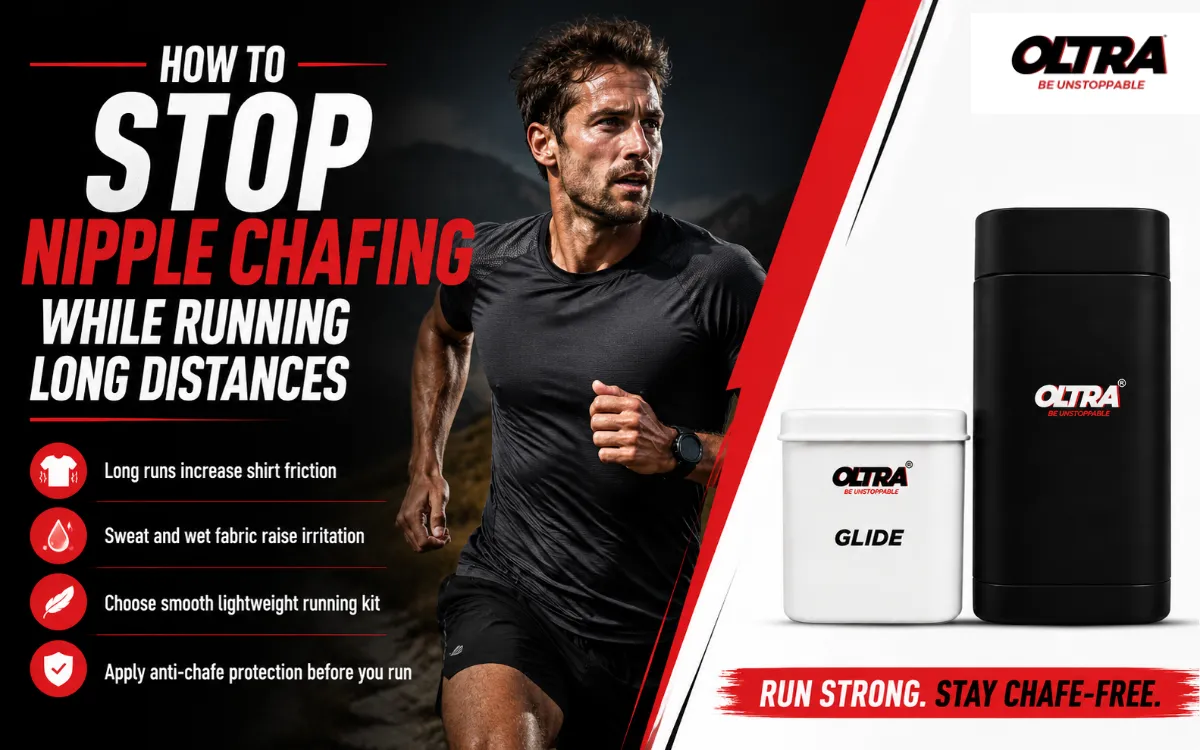
Long-distance running tests more than cardiovascular fitness. Clothing, sweat, temperature and repetitive motion can all affect whether a runner remains comfortable. Nipple chafing is a common example of a small issue that can become extremely painful during a half-marathon, marathon or extended training session.
The problem rarely appears because of one dramatic movement. It develops through thousands of small contacts between the chest and running kit. Preventing it therefore requires a routine that works from the opening kilometre to the finish.
Why Distance Changes the Risk
A five-kilometre run may finish before minor rubbing causes noticeable irritation. During a longer event, the same fabric continues moving across the nipple area for hours.
Risk can increase as the session progresses because:
-
Clothing becomes wetter and heavier.
-
Salt accumulates on the skin.
-
Posture changes as the runner becomes tired.
-
A hydration vest may shift.
-
Rain or humidity keeps fabric damp.
-
The runner has fewer opportunities to change clothing.
-
Heat increases perspiration.
Small kit problems that seem harmless in the first hour can become major distractions later.
Build Protection During Training
Long-run comfort should be developed gradually. Waiting until race morning to solve chest irritation creates unnecessary uncertainty.
Use weekly long runs to test:
-
Running-top fabric and fit
-
Sports-bra support and seam placement
-
Hydration-pack straps
-
Anti-chafe product quantity
-
Reapplication timing
-
Performance in rain and heat
Record any redness or tenderness after each session. A simple note in the training diary can reveal patterns linked to a particular top, weather condition or distance.
Wear a Top That Controls Movement
A loose top may swing or flap across the chest, particularly in wind. A very tight top may create concentrated pressure at seams or printed areas. The best option is usually a smooth, close-fitting technical garment that allows normal breathing and arm movement.
Look inside the garment before buying it. A visually attractive design may hide thick seams, labels or rough heat transfers.
For long events, prioritise:
-
Moisture-wicking fabric
-
Flat or minimal seams
-
A tested fit
-
No stiff chest logo
-
No irritating labels
-
Compatibility with a hydration vest
-
Comfort when fully soaked
Do not assume expensive clothing is automatically chafe-free. The shape and fit must suit the individual runner.
Prepare the Skin Before Dressing
Anti-chafe preparation should happen before the runner puts on the final race kit. The skin should be clean and fully dry so the chosen barrier can be applied evenly.
Cover the complete contact area rather than making one small swipe across the centre. Shirts move vertically and sideways, especially during hills, fast intervals and changes in posture.
Apply enough product to create a consistent layer, but follow the manufacturer’s instructions. More is not always better if it leaves the area unnecessarily messy or causes the garment to shift.
Barriers, Covers and Balms
There are two main prevention approaches. Adhesive covers create a physical shield, while balms reduce drag by making the skin surface smoother.
Adhesive protection can work well when it remains secure, but the runner should test the adhesive in advance. Sweat, body hair, sensitive skin and product residue may affect comfort or removal.
Balms are convenient for larger or irregular contact areas. They can also be reapplied during an event without removing clothing completely. Some runners combine approaches, but every combination should be tested during training.
Advice aimed at nipple chafing runners should emphasise individual testing. No single method is ideal for every skin type, body shape or distance.
Plan for Reapplication
Protection that works during an easy 40-minute run may not remain sufficient for a four-hour marathon. Heat, sweat and rain can reduce the effectiveness of any surface barrier.
Reapplication may be useful:
-
Before the start after a long wait in the race village
-
At the halfway point
-
After prolonged heavy rain
-
After changing a wet top
-
When early tingling appears
-
During an ultramarathon kit stop
Carry a compact product in an accessible pocket rather than placing it at the bottom of a packed bag. Reapply in a private location and with clean hands or a direct applicator.
What to Do When Irritation Starts Mid-Run
Do not ignore the first burning sensation. Early action can prevent superficial irritation from becoming cracked or bleeding skin.
Slow down briefly and assess the situation. Straighten twisted fabric, adjust a vest strap or tuck the top differently to remove direct contact. Apply additional protection if the skin is intact and the product is designed for that purpose.
At an organised race, ask the medical or aid-station team whether they have suitable dressings. Do not use unknown tape, fragranced wipes or harsh antiseptic products on sensitive skin.
Continuing through severe pain can make recovery longer. Performance goals should not take priority over obvious skin damage.
Adapt the Routine to the Weather
Hot weather increases sweating, while rain saturates clothing from the outside. Cold conditions can also contribute because sensitive tissue may become more prominent under a running top.
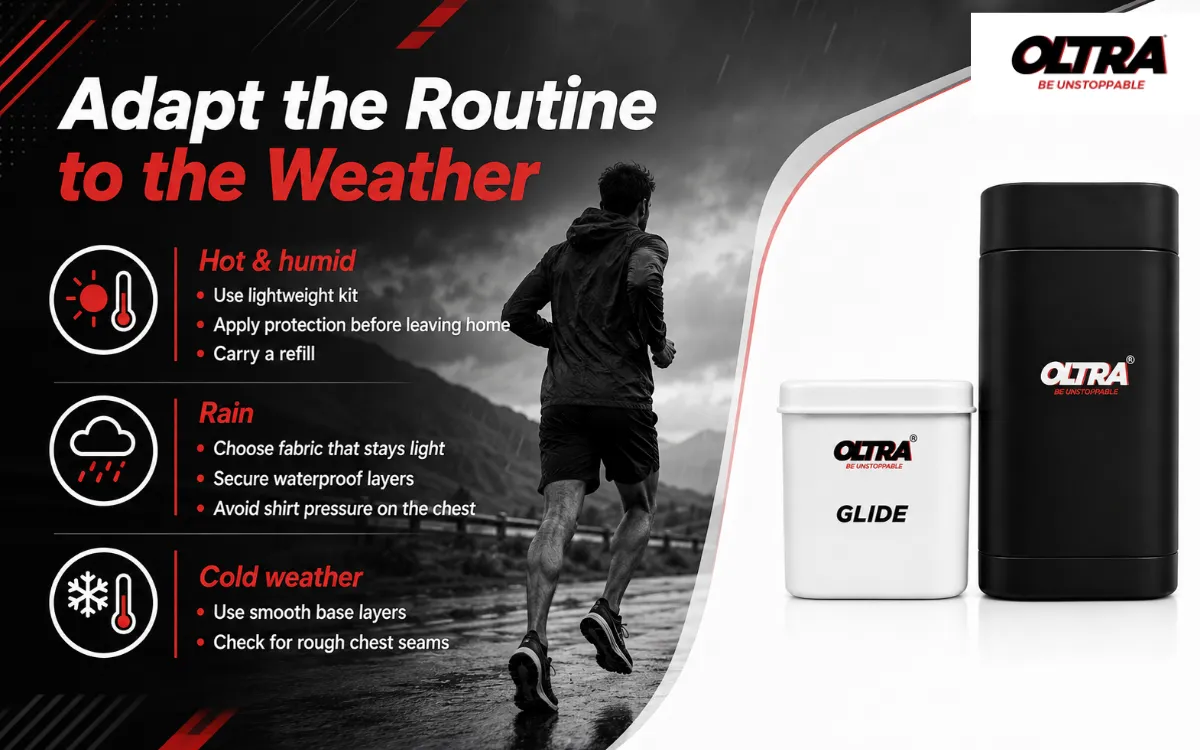
Check the forecast and adjust accordingly:
Hot and humid conditions
Use a lightweight kit, apply protection before leaving home and consider carrying a refill.
Rain
Choose fabric that does not become excessively heavy and secure any waterproof layer so it does not push the shirt against the chest.
Cold weather
Use smooth base layers and check that thermal clothing does not contain rough chest seams.
The same runner may need different strategies across the seasons.
Post-Run Skin Care
Remove wet clothing soon after finishing. Leaving a salty top against irritated skin extends the contact that caused the problem.
Wash the area gently with lukewarm water and mild cleanser. Pat dry rather than rubbing with a towel. Wear a soft, loose top while the skin settles.
Avoid another long run until ordinary clothing no longer causes discomfort. Medical advice is appropriate if the area becomes increasingly painful, swollen, warm, produces pus or does not begin improving.
Why Choose Oltra for Long Runs?
Oltra creates natural personal-care products intended to support active and everyday routines. Its Oltra Glide starter pack includes a reusable applicator and a replaceable 40g refill, making it convenient to keep one application system and change only the balm refill. The balm is made in Britain, certified plant-based, vegan and cruelty-free. It is also formulated without petroleum, parabens or aluminium.
Athletes researching how to stop nipple chafing while running can use the direct applicator on the chest and other common hotspots before a long session. The Core scent provides an unscented choice, while additional scent profiles are available for those who prefer them.
Make Protection Part of the Long-Run Plan
Long-distance comfort comes from preparation rather than improvisation. Test the top, practise application, observe how the skin responds and carry a reapplication option when the distance or weather demands it.
The best routine is one simple enough to repeat before every important session. By treating skin protection as normal running preparation, athletes can focus on pacing, breathing and enjoying the distance ahead.